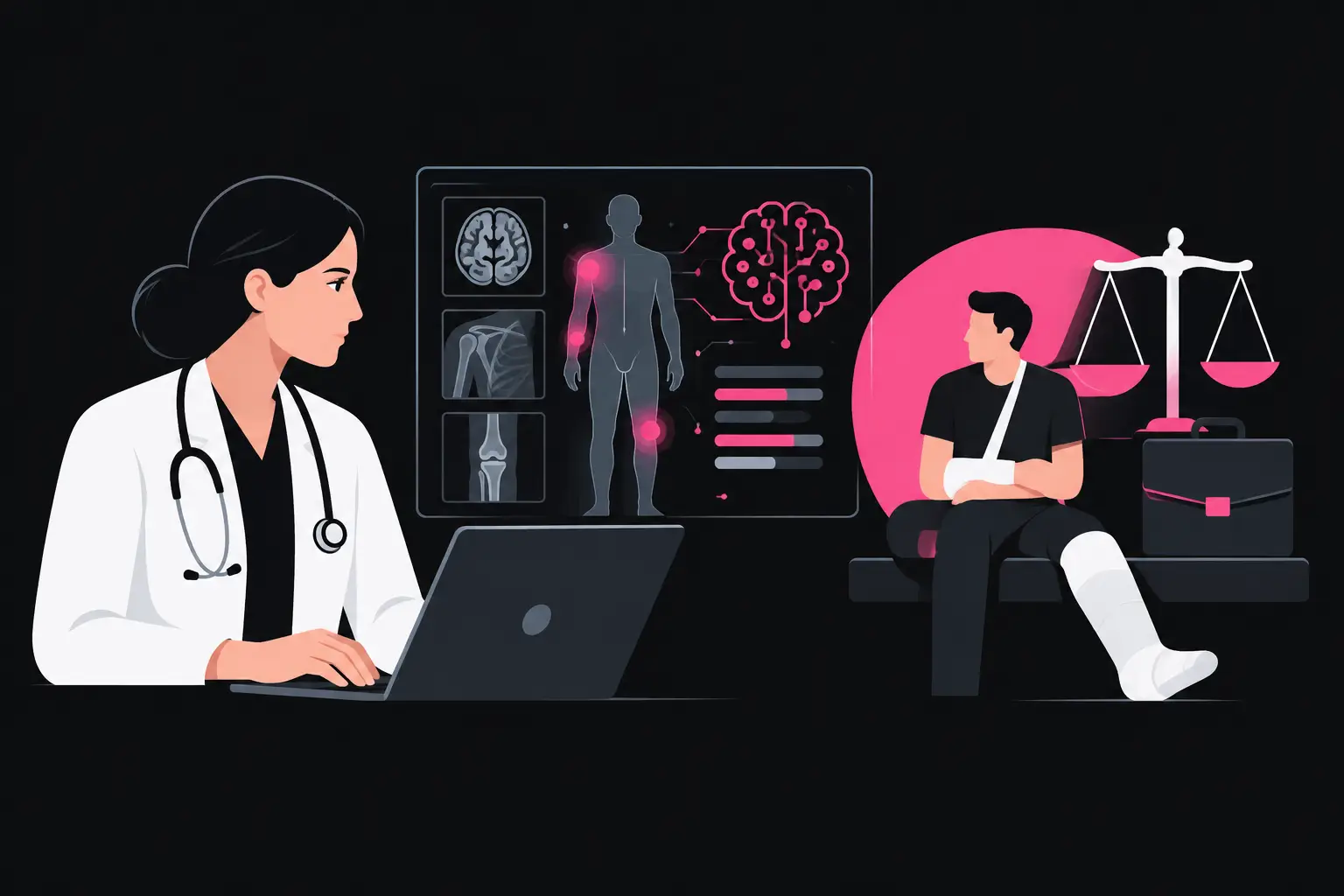
A pain score recorded in A&E, a physiotherapy note written months later, or a consultant’s opinion on a future operation can materially affect the value and direction of a personal injury claim. This is where medical intelligence becomes relevant. In a legal context, it means gathering, interpreting and presenting medical information carefully enough to show what happened, how an injury has affected someone, and what support or compensation may reasonably be required.
For people pursuing a claim in Northern Ireland or the Republic of Ireland, medical evidence is not simply paperwork. It often provides the clearest independent account of an injury and its consequences. Used properly, it can support a fair resolution. Used carelessly, it can create delay, confusion or an incomplete picture of a client’s needs.
What does medical intelligence mean in a legal claim?
Medical intelligence is not a fixed legal term. It is a useful way of describing the informed use of medical evidence in a case. That evidence may include hospital records, GP notes, scans, prescription records, physiotherapy reports, occupational health assessments and reports prepared by independent medical experts.
The purpose is not to replace the treating clinician’s role or to make legal decisions based on a diagnosis alone. A solicitor must understand what the records say, identify where further expert evidence is needed, and consider how the medical position connects to the legal issues in dispute.
For example, a person may have suffered a relatively modest injury in a road traffic collision but be unable to return to a physically demanding role for many months. Another claimant may have a history of back pain before an accident, yet experience a genuine worsening of symptoms afterwards. In both situations, the legal question is not answered by one document or one appointment. It requires a measured assessment of the medical history, the accident and the practical impact on the individual.
Why medical evidence carries such weight
In a personal injury claim, the claimant must generally establish that another party was legally responsible and that the incident caused, or materially contributed to, the injury claimed. Medical records and expert opinion are central to the second part of that assessment.
They may help establish the nature of an injury, its likely cause, the treatment received, the expected recovery period and whether there are ongoing restrictions. They can also support claims for losses arising from an injury, such as loss of earnings, care provided by family members, travel to appointments or the cost of treatment.
The records are particularly valuable because they are often made close to the time when treatment was sought. However, they are not infallible. A brief consultation note may not capture every symptom. Equally, an entry that appears inconsistent with a later account may have an innocent explanation. People in pain can struggle to describe symptoms precisely, and clinicians must record a great deal of information within limited appointment time.
This is why an experienced solicitor examines the evidence as a whole rather than relying on isolated phrases. The chronology matters. So does the difference between a symptom first reported after an accident and a condition that was present beforehand.
Independent expert reports
A medical expert instructed for legal proceedings has a different role from a GP, consultant or therapist providing treatment. The expert’s duty is to provide an independent opinion to the court, not to argue for the claimant or defendant.
The expert will usually review relevant records, meet and examine the claimant where appropriate, and prepare a report addressing diagnosis, causation, prognosis and recommended treatment. Depending on the injuries, this may involve an orthopaedic surgeon, neurologist, psychiatrist, psychologist, pain specialist or another suitable specialist.
A well-prepared report can explain technical matters in plain terms. It may distinguish between temporary symptoms and long-term impairment, address the effect of a pre-existing condition, or set out whether further treatment is likely to be required. It can also identify uncertainty. That is not a weakness. Where medicine cannot provide a precise answer, an honest opinion that explains the range of possible outcomes is more useful than false certainty.
Building a reliable picture of an injury
The strongest claims are usually supported by a consistent, properly documented account. This does not mean a claimant must have attended every possible medical appointment immediately after an accident. People respond differently to injury, and some may initially expect to recover without formal treatment. Nevertheless, prompt medical attention is sensible where symptoms warrant it, both for health reasons and because it creates a clear clinical record.
Keeping a simple record can also help. Dates of appointments, medication, missed work, cancelled plans and help needed at home may all become relevant later. This is especially true where an injury affects daily life in ways that are not obvious from a scan or examination, such as disrupted sleep, difficulty driving, reduced mobility or anxiety about returning to work.
Care is needed, however, not to overstate symptoms. A claim should reflect the genuine impact of the injury. Exaggeration can damage credibility and may affect the entire case. The same principle applies to social media. Images or posts may be taken out of context, but they can be examined by insurers and defendants. A person who is injured is not required to remain at home, yet public posts should not contradict the limitations being described in medical or legal evidence.
Medical intelligence and pre-existing conditions
Pre-existing conditions are often a source of concern for claimants, particularly those with previous back, neck, joint or mental health difficulties. Having a medical history does not automatically prevent someone from making a claim.
The key issue is usually what would probably have happened without the accident or incident. Did it cause a new injury? Did it aggravate an existing condition? Did it bring forward symptoms that may have developed later in any event? The answers can affect the level and duration of compensation, but they must be based on evidence rather than assumption.
Full disclosure to a solicitor and medical expert is essential. Previous symptoms, treatment and accidents may already appear in medical records, so withholding them is unlikely to help. More importantly, a complete history allows the right questions to be put to the expert and avoids an inaccurate case being presented.
This approach also applies where psychological injury is alleged. Stress, anxiety, low mood or trauma-related symptoms can be real and significant, but they require sensitive and careful evidence. A psychiatric or psychological expert may need to consider earlier life events, workplace pressures, previous treatment and the incident itself before reaching an opinion on causation and prognosis.
When the evidence is disputed
Insurers and defendants may accept that an accident occurred while disputing the extent of injury, its cause or the need for future treatment. They may obtain their own expert evidence, ask questions of the claimant’s expert, or seek access to further records.
A disagreement between medical experts does not mean a claim has failed. It means the points of difference must be understood. Sometimes the issue can be narrowed through written questions, a joint discussion between experts, or further records. In other cases, a court may need to decide which opinion it prefers.
The appropriate response depends on the case. A straightforward soft tissue injury may be capable of early settlement once medical evidence is available. A claim involving serious injury, ongoing disability, complex treatment needs or substantial loss of earnings should not be rushed merely to obtain a quick outcome. Settling before the long-term position is clear can leave a claimant without adequate provision for future care or losses.
The importance of timing and confidentiality
Medical records are sensitive personal information. They should be requested, stored and shared only where necessary for the claim, with proper authority and regard for confidentiality. A claimant should understand why records are being sought and what information may be considered relevant.
Timing matters too. An expert report obtained too early may not be able to offer a settled prognosis. Obtaining one too late may delay progress unnecessarily. The right point depends on the injury, treatment plan and recovery pattern. In serious cases, evidence may need to be updated as a person’s condition develops.
For cross-border matters, additional care may be needed. Treatment may have been received in Northern Ireland, the Republic of Ireland or both, while the accident, employment relationship or insurer is based elsewhere. Records, procedures and legal rules can differ. Early advice can help ensure that evidence is obtained in the right form and that relevant time limits are not missed.
A careful approach protects the person behind the claim
Medical intelligence is valuable because it keeps a personal injury claim grounded in evidence while recognising that an injury affects a real person, not just a case file. It supports sensible decisions about settlement, treatment, work and future financial needs.
If you have been injured and are unsure what records or medical reports may be required, obtaining early legal advice can bring clarity before important evidence is lost or assumptions are made about your recovery. The right approach is careful, confidential and focused on the circumstances that matter to you.