
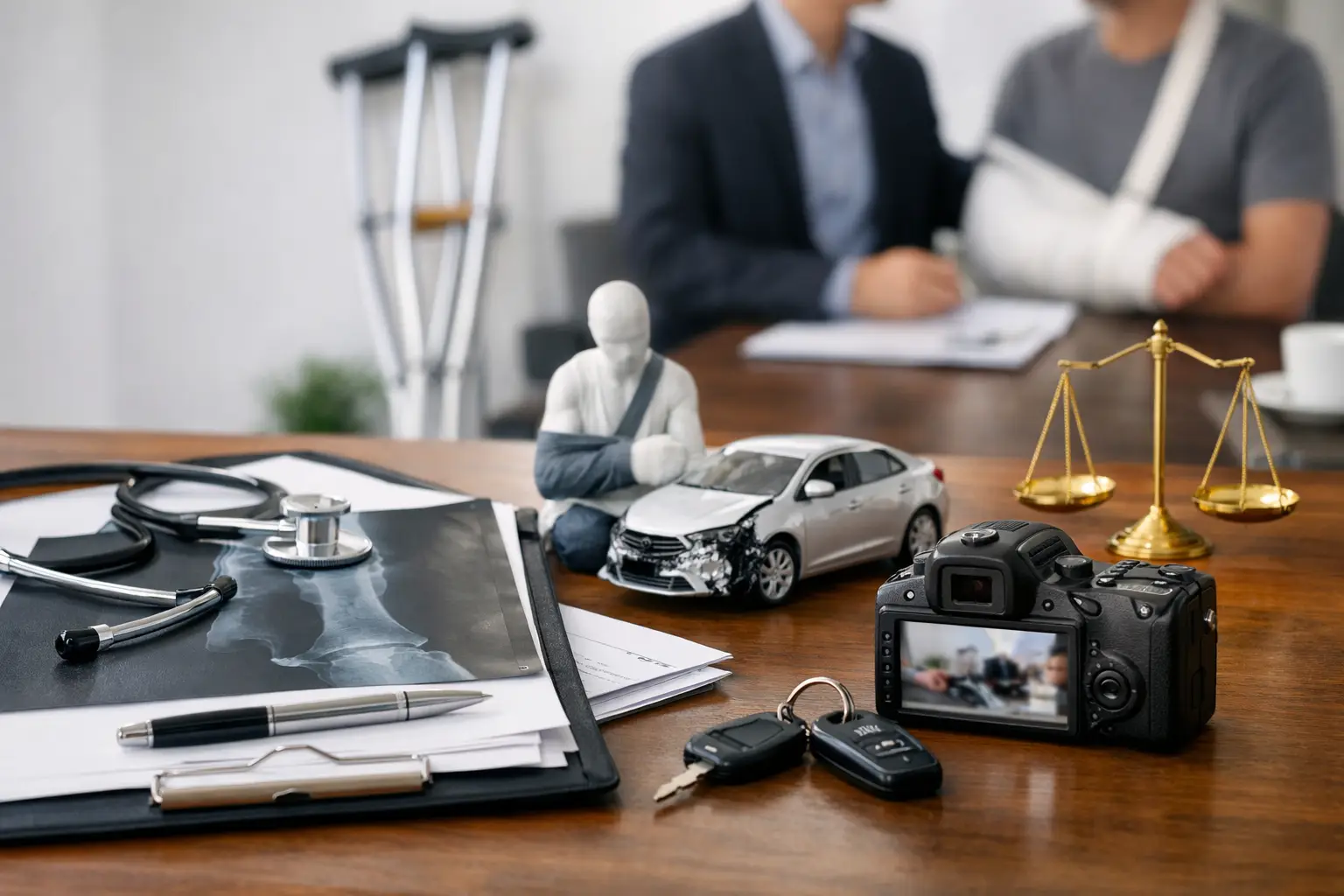
A photograph of a wet supermarket floor taken ten minutes after a fall can be more useful than a clear memory six months later. The same is true after a road traffic collision, an accident at work or an injury caused by a defective product. The best evidence for injury claims is usually gathered early, while the cause of the accident, the condition of the location and the impact on daily life can still be properly recorded.
A personal injury claim is not simply about showing that you were hurt. It must ordinarily establish what happened, who may be legally responsible, the nature and extent of your injuries, and the financial consequences they have caused. Good evidence gives your solicitor a reliable foundation from which to assess the case, approach the other party and, where necessary, progress litigation.
What makes evidence strong in an injury claim?
Strong evidence is relevant, contemporaneous and capable of being independently verified. In plain terms, it should help answer a specific question and be created close to the event, rather than reconstructed from memory long afterwards.
For example, an A&E record may confirm that you attended hospital on the day of an accident and describe the symptoms reported at the time. CCTV footage may show precisely how an incident occurred. A witness with no personal interest in the outcome may support your account of a hazard or the actions of another person.
No single document necessarily decides a claim. A case can be well supported by a combination of medical records, photographs, witness information, accident reports and financial documents. Equally, evidence has to be considered in context. A photograph may show a pothole, but it will not by itself prove how long it had been present or whether the responsible authority should have known about it.
The best evidence for injury claims
Medical records and expert medical evidence
Medical evidence is central because it connects the accident to the injury and records its severity. Seek appropriate medical attention promptly, both for your health and because delayed reporting can create avoidable questions about causation.
Relevant records may include GP notes, hospital and ambulance records, physiotherapy reports, prescriptions, scans and referral letters. They can demonstrate not only the original injury but also ongoing symptoms, treatment, recovery times and any restrictions on work or ordinary activities.
In many claims, an independent medical expert will later examine you and prepare a report. This is different from your treating clinician’s records. The expert’s role is to provide an impartial opinion on diagnosis, causation, prognosis and recommended treatment. Be accurate and consistent when describing symptoms. Do not minimise problems out of politeness, but do not overstate them either. Credibility matters throughout a claim.
Photographs, video and physical evidence
Take photographs as soon as it is safe to do so. Record the scene widely enough to show its location and surroundings, then take closer images of the defect, hazard or vehicle damage. Photographs of visible injuries, such as bruising, swelling, cuts or burns, can also be valuable, particularly where their appearance changes quickly.
For a road traffic accident, photograph vehicle positions, registration plates, road markings, traffic lights, weather conditions and any visible damage. At work, images may show faulty equipment, inadequate signage, an obstructed walkway or a missing guard. In a public place, capture the surface condition, lighting, warning signs and any relevant entrance or aisle.
Video can be helpful, but it should be preserved in its original form. Avoid editing it or adding commentary. If there may be CCTV, report the incident promptly and tell your solicitor. Many systems overwrite footage after a short period, so delay can be costly.
Keep any relevant item where reasonable to do so. This could include damaged clothing, footwear, a faulty product or a helmet involved in a cycling collision. Do not alter or repair an item before it has been considered, unless safety requires it.
Witness details and accident reports
Independent witnesses can be particularly persuasive where liability is disputed. Obtain names, telephone numbers, email addresses and, if possible, a brief note of what each person saw. A witness may later move away or forget important details, so early information is far more useful than a vague recollection that someone was present.
Report the accident through the appropriate channel. This may mean an accident book at work, a manager in a shop, a school or leisure facility, or the police after a serious road collision. Ask for a copy of any report or note the reference number, date, time and name of the person to whom you reported it.
An accident report is not a finding of legal fault. It can, however, provide a contemporaneous account of the location, people involved and initial explanation. Read it carefully before signing. If it is inaccurate, ask for your concerns to be recorded rather than signing a statement you do not accept.
Evidence of financial loss
Compensation may include more than pain and suffering. If an injury has left you out of pocket, retain documents that evidence the loss. This includes payslips, correspondence about absence from work, invoices for treatment, receipts for medication, travel costs, care provided by family members and the cost of replacing damaged personal items.
Keep a simple diary if symptoms affect sleep, mobility, hobbies, childcare or work. A brief, dated record can help show the day-to-day effect of an injury that is not obvious from a scan or medical note. It is most useful when it is factual: record what you could not do, what help you needed and any expense incurred.
There is a balance to strike. Do not make unnecessary purchases on the assumption that they will be recovered. Losses should be reasonable and supported by evidence. Where a particular treatment or expense is significant, obtain advice before committing to it if possible.
Evidence depends on how the accident happened
The evidence needed in an injury claim is shaped by the circumstances. A workplace claim may require risk assessments, training records, maintenance logs, rotas and records of previous complaints. These documents can help establish what an employer knew, or ought reasonably to have known, about a risk.
For road traffic accidents, police information, dashcam footage, vehicle repair documents and mobile phone records may become relevant. A driver should never attempt to gather evidence at the roadside if doing so puts them at risk. Safety and medical care come first.
In a slip or trip claim, the key issue is often whether the occupier had a reasonable system for inspecting, cleaning or repairing the area. A picture of the hazard is useful, but cleaning logs, inspection records and CCTV may be equally important. Those documents are usually held by the other party, which is one reason for seeking legal advice without delay.
Claims involving public authorities, cross-border journeys or accidents in the Republic of Ireland can raise additional procedural issues. The practical step remains the same: preserve what you have, make a clear record and obtain advice early from a solicitor familiar with the relevant jurisdiction.
Protecting evidence without harming your case
Social media deserves particular care. Posts, photographs and comments can be taken out of context and may be reviewed during a claim. It is sensible to avoid discussing the accident, the claim or your injuries publicly. This does not mean withdrawing from ordinary life, but it does mean thinking carefully before sharing content that could be misunderstood.
Keep originals wherever possible. Save photographs and messages with their dates, do not overwrite dashcam files, and retain receipts rather than relying on bank statements alone. Make a folder, whether paper or digital, and add material as it becomes available. A clear chronology of the accident, appointments, treatment and time away from work will assist your legal team.
You should also be cautious about accepting an early offer before the medical position is clear. An injury that initially appears minor may take longer to resolve than expected. A settlement is usually final, so its adequacy depends on understanding the likely recovery, future treatment needs and all reasonably foreseeable losses.
When to speak to a solicitor
Early advice can make a practical difference. A solicitor can identify evidence that you may not be able to obtain yourself, advise on preserving it, arrange appropriate medical assessment and ensure the claim is progressed within the applicable time limits. This is especially relevant where the facts are disputed, symptoms persist, liability involves an employer or public body, or the accident has a cross-border element.
DND Law provides clear, sympathetic advice to people dealing with the consequences of an accident. The immediate priority is always your health. Once you are safe, taking a few careful steps to preserve evidence can protect your position and give your claim the fair consideration it deserves.